The Uncommon Journey

The Uncommon Journey
Wondering as I Wander

Monday, January 15, 2018

Rediscover

There is this idea that we are perpetually rediscovering what is already true. In our spiritual walks, we are uncovering the God who is already at work within us. Science discovers what exists already but didn’t know or couldn’t name. Our experiences shape us... and yet who we are shapes how we experience things. In this way, we go through life rediscovering who we are.

In depression, so often we feel lost. Questioning if this is all there is. Is this all I am? Is it enough - no - can it be more - I don’t think so.

The lostness of ourselves is the fact that we have lost the eyes to see us for who we are. I am on a quest to rediscover what I have forgotten - the me that I already am - the me that will shape the one I become - the me that has been refined through every storm. Michelangelo is quoted that in his sculpting he simply removed what wasn’t the sculpture - uncovering the art within. “The David” was always in the marble - Michelangelo’s task was to uncover it. This is now my quest. To uncover what already is. To reveal what has been made.

There are some real key issues that keep this from happening. First, there is an idea that we have to come up with what the sculpture looks like - and that we can do it wrong. This is fundamentally incorrect, but also assigns a huge weight of never being enough, not looking right, being afraid that we cannot undo the work already done. In this is idea, the past has already spoiled the future and I need to spend the rest of my life trying to buff out the stain and the scars. In this idea I am frozen, fearful if I move to the right or the left, I am setting off a string of events that forever rewrites the possible. And that my legacy is dependent on today’s work - so I better not get it wrong.

Unconditional love (and grace) are at odds with this concept, which is intellectually easy to see, but emotionally nearly impossible to believe. Unconditional love accepts and loves the sculpture beneath. The scars and stains are part of the final version that is already cherished. In this, I have a choice. I can spend my life trying to earn love, worrying about everything that is not enough. Or I can throw myself into the idea that I was never enough but already chosen - and that means I’m not earning love and I’m incapable of losing love.

Here’s the awful truth - I want to be chosen for something I have done. I want to be able to point to the reason why I am worthy. I want to be handed a trophy that proves my worth and polish it every day. I see all my flaws, my tears, my shame. When my darkness stares me down, don’t I need some bright and shiny proof that my good outweighs my bad? What if one more dark thing tips the scales and I am no longer accepted. No longer loved. The truth is laid bare for all to see - and the sculpture beneath is judged as rubbish instead of art.

Even though I have a glimpse of grace, I choose fear.

At the heart, I think I am smarter than God. I see the true me and when He sees what I really am, He will change His mind. I don’t accept myself as precious, knowing the truth of who I am, so how could He. I wouldn’t choose me - and in a matter of time, He will realize His mistake. This leaves one path out of the darkness - to believe what He sees is the more real version of me than the one I can see. To believe He sees the finished version and intentionally chose me - the me I haven’t seen yet. Grace seems to good to be true.

But grace believes that God is greater than I am. He is more loving that I am. He is more forgiving than I am. His goodness is greater than my own. His patience is infinite. His truth is eternal.


Before I can rediscover anything about myself, I need to rediscover God. I have to believe the truth of who He is before I can accept the truth of myself. As God reveals Himself, I can rediscover the one He made me to be. The one He chose. The one He loves. 

Friday, September 22, 2017

The search...

As a person plagued with anxiety and depression, I find myself desperate for a narrative to move me. Whether it's binge watching seasons of dramatic television, devouring 16 novels on Elizabethan times with compulsion or faithfully following the programming of NPR, I am a consumer of stories. I invest myself recklessly into fictional characters, as determined to know them as if I was a close friend. Not because I'm in need of a companion. I have been blessed to call some of the most amazing people in the world my friends and family. Not because my life is horrible. I understand that I have so much to be thankful for: health, material goods, a job that I love. I'm not even looking to create a place to belong. I have a home which is a safe space - and people to share it with.

I'm looking for myself. I'm trying to discover my narrative.

I can sing every word of Hamilton and identify with the heroes and the villains. I see a part of myself as a little of every character of Everyone's Son - part crack addict mother, part abandoned child, part mourning foster mom, part judge. I can see how people's stories weave together into fabrics of community and how each thread, whether made of brilliant scarlet silk or fraying burlap, makes a tapestry lovely to behold. But what I can not see, is me.

The many hats I wear give schedule and structure to my day. Wake up a mom, go be a professor, be a friend during lunch, be a consultant late afternoon, be a mom again through dinner, be a lover to my husband. Then sleep. And repeat. And repeat. And repeat.

When the hats are removed, I'm naked. Ghost like. Translucent.

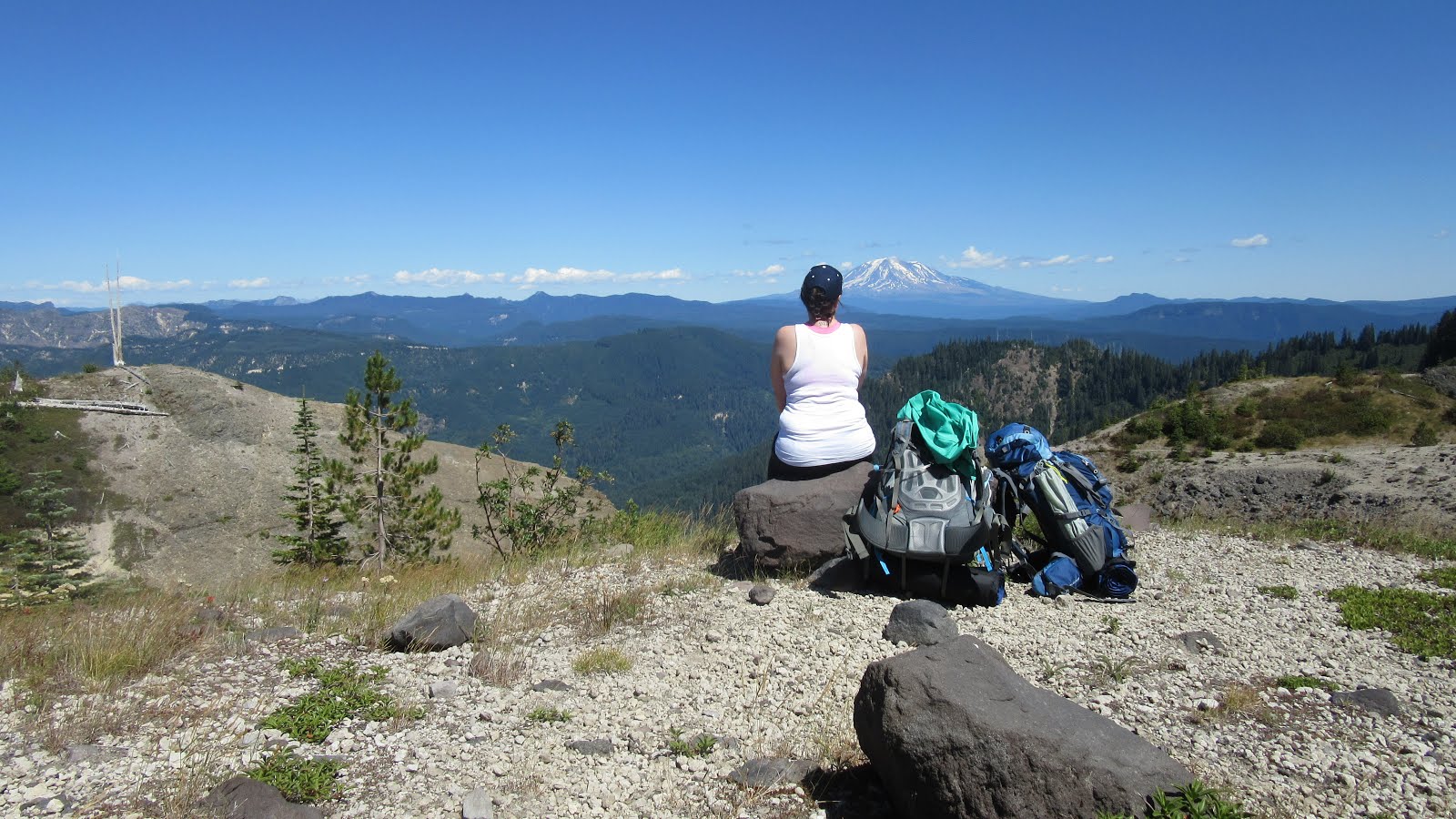
My husband and I go hiking and on every trail, there is one perfect moment. There is a moment when I am surrounded by nature and the woods are alive. The birds are chirping and squirrels are skittering up and down trees. The leaves rustle in the wind and the sun shines through the leaves giving a brightness to the forest floor. Everything around me is alive. And that is enough. Mosses and mushrooms, caterpillars and spiders, trees and vines....all alive. Breathing and basking in that moment. For some it will be measured in days. For some the years will come and go, and yet they will remain.

For me, in that moment, I can simply breath and know that I don't need more of a purpose than to exist in the moment. I am nothing. And that's okay.

Some people live their life as a part of a jigsaw puzzle. Utterly unique, but integral to a bigger picture. The edges, nooks and curves allow them to perfectly connect to the pieces around them, and only in that form does their unique shape, size and color become a picture. Most people find that blend of uniqueness and belonging a place of certainty and strength. But my whole life I've been looking for something else. I've been looking for a world without hats. Without structure. Without metrics. A life where simply the act of filling my lungs is enough.

To live within the communal expectation, constantly at odds with the reality of my soul and the normality required of me, is exhausting. Keeping the will to search for myself, rather that settle for being defined by my routine, is not an easy task. But the very act of searching, these words I craft right now, are a narrative all my own. And for now, that will have to be enough.


Thursday, July 20, 2017

On loving and losing

It hits me at the most random times...walking down a hallway at Purdue, driving in my car, sitting on my couch reading a book. There's no obvious trigger, but my subconscious knows that I am grieving...aching...missing....

This summer three dear friends move to far off places. Thanks to technology, they are a simple FaceTime call away and yet things will be different. As their lives blossom and grow in new places, with new friends and new experiences, staying current - relevant becomes harder. We've all had the best intentions to keep up with far away friends to find ourselves going weeks without contact, or letting Facebook replace real connection, or dwindling down to the Christmas card and annual generic letter that accompanies the best photo we could find from that year. And the face to face visits let you pick right up with the laughter and common ground, and yet there is an unspoken gap between you. The gap of all the daily life which occurred without regular contact. We are all so busy it's hard enough to keep up regular contact with those who live in town. Add hundreds of miles and different time zones, the challenge grows.

While it's not a lost cause, to think that relationships won't change over time and distance is simply naive. No matter how intentional you try to be, the relationship must change. It cannot look the same as when you lived in closer proximity. And yet...what if the change is for the better....

Maybe it's wishful thinking on my part, but I have been pondering if having a friend move away could actually add depth to the relationship over time. Everyone wants to be wanted. What if your friendship shows even greater levels of devotion as each person actively pursues the other? What if the intentionality and time required to maintain regular contact demonstrates a deeper love and appreciation for the relationship? What if the relationship can be an anchor in a sea of change - saying "no matter where you go or what happens to you, I will be here". It's one thing to say the words, but another to prove it to be true.

When my husband was deployed time and time again, in some ways it was easier to love him (hard to argue with a guy at war) but it was definitely harder to communicate that same love across the ocean and desert that separated us. But when I reread the letters from those deployments, I hear the very purest parts of our heart for each other. The one that says "My love for you is not dependent on fun activities, common experiences or even the joy I have in seeing your smile. My love for you is simply that - my love for you. Because of who you are."

And so I say to those three wonderful women who will no longer meet me for coffee or sit next to me at church....follow your path - and I will celebrate your new life with you - because my love for you is simply that - a love of who you are. Time and distance will not change that. But don't be surprised when I break down in tears during those random moments when the loss of your smile hits me. You can't care this much without experiencing the bittersweet ache that comes with change.

Friday, April 14, 2017

Into the Darkness

Tuesday, I gave into what felt like defeat and went to the doctor to pursue medication for my depression. I feared the appointment over the next 24 hours, but also realized I had gotten to a point where I was truly not functioning as a person. I was barely getting through the necessities of life and simply couldn't face anything else. I felt like I was being swallowed up by darkness and just wanted to get out.

In the examination room, my worst fears played out through the conversation with my doctor. While he listened patiently to me explain the current situation, he sighed and responded, "We've had these conversations before. Susan, you have depression. You will always have depression. You can either choose to treat it or continue in these cycles, but it is only going to get worse if you ignore it. You took yourself off the medication because you felt better, and now you have gotten to a point of crisis again. This will continue every time you choose to stop treatment. You will need to be on medication the rest of your life."

For the first few hours after the appointment, I truly felt like I had been punched in the stomach. Or the face. Or kicked in the teeth. Or maybe all 3. I felt beaten. This was the diagnoses I had dreaded. This was the statement I had anxiously feared at 2am when my mind would keep me awake. This was what had me in a perpetual state of panic trying to fix what was wrong with me, always coming up with a new plan that would solve this problem. He said aloud what I had heard whispered in my head for years.

While I wouldn't recommend him as a counselor, he is an excellent doctor and he was simply telling me truth in a way I couldn't ignore it. See, we had been in this cycle and I was one of those obnoxious patients that stops taking medicine and then wonders why the symptoms come back. But unlike the person with high blood pressure or bad teeth, I saw treatment as failure. I saw medicine as giving up. I saw life long illness as condemnation. Something had to be wrong with me if I was a depressed person. I'm supposed to have the "joy, joy, joy, joy down in my heart." While high blood pressure is in your genes, depression was of my own making. Wasn't it?

It took his heavy handed approach to make me come to terms with how I saw myself. He flat out asked me: "Where does all this pride come from? It isn't helping you at all."

Not only was my depression my problem to fix, failure to fix it meant that I couldn't do anything else in life. Everything I wanted for my future was on hold until I got this depression thing under control. But I didn't want treatment. I wanted a cure. I wanted it gone. I wanted to be free of the darkness.

A funny thing happened as I processed his assessment of the situation. I thought of all the people I knew who had life long illnesses and how they dealt with them. I thought of how much respect I held for their joy within the difficulty, their courage to deal with their issues head-on, their personal responsibility they took for their health and treatment. For those people, they could live a joyful life and be sick for all their days here on earth. For those people, they could be wholly themselves, even with a brokenness that couldn't be fixed in this lifetime. And while they would choose to be without it if they could, they used their illness to see the healing hand of Christ - even though they weren't fully healed.

Today is known as Good Friday - the day Jesus entered the darkness on our behalf. The day He gave into death, so that death would die. But it is only on this side of the resurrection that we can call it "Good". That day and the Saturday that followed were dark - both because the sky turned black and because all who loved Jesus watch Him die and be buried. The physical and spiritual realms were dark.

On this side of Easter, we can call the darkness good, because we know it isn't the final word. We know that light remains on the other side. We know Sunday came - and eternity is coming.

With a life long illness, I can no longer look for a cure in this life, but I can see the other forms of healing already offered to me. I can no longer try to fix myself, but I can enter life with joy for all the days I've been given. And I can humbly abandon my thought that "I am better than this" and instead take personal responsibility for my treatment. I can enter into the darkness, knowing there is light on the other side.

And for the first time, in a long time, it isn't fear that I feel.

It is hope.


Tuesday, March 28, 2017

Um, thank you?

My husband started his prayer over our meal last night, "Dear Lord, thank You for today..." and from that point on, I didn't hear another word he said. I was lost in my own mind questioning, am I Lord, am I thankful for today?

Was I thankful in the moment that I discovered my son was gone and we had no idea where he was? In the pit of my stomach, I knew he had run away, but I had no idea where or how much of a head start he had on us. I was terrified...

Was I thankful in the moment I saw him on the grounds of the community center, just within shouting range - watching him turn and run from me as fast as he could as soon as he saw me? I could already see he was soaked to the bone as he dashed over the hill. I was panicked...

How about as I climbed through the woods, chasing after him, unable to see more than a few hundred yards, being cut by thorns and thistle that were growing in wild bushes in the midst of all the trees. I screamed his name while I prayed for his safety, prayed for God to bring him back to me, prayed for God to point me in the right direction - all while crushed under the thought that I could never find him in those woods on my own if he wasn't wanting to be found.

I think turning and going back to the community center to call 9-1-1, get people to help me search, telling my mom to stay with the kids - that moment of turning in the opposite direction of where I had seen my son go and walk away - that moment of leaving my son running away from me in the rain - I can't think of a harder moment in my life. I didn't have a phone and I knew I needed help, but going back to the center meant I had to stop looking for him. In that moment all I felt was hopelessness.

Or the moment I answered the questions during my call to 9-1-1 "Yes, he has run away before, but never like this." "Yes, he is on an anti-depressant." "Yes, he could possibly be a danger to himself." I can't even tell you what I was thinking and feeling. But I wasn't thankful.

Or how about when he got out of the police car, dripping wet, pulling away from my embrace and not looking at me, as I choked back the sobs. He was back in my sight, but he wasn't WITH me. That moment broke my heart.

Was I thankful when he was back at home, sitting on our sofa, telling us his plan was to run away...and just keep running until he couldn't run anymore...and then....

No. I wasn't thankful. I was mourning my poor son's spirit: that at 13 years old he is running away from life - with nothing to run to. Just running into the woods - in the rain - with nothing waiting for him on the other side.

1 Thessalonians 5:16-18 "Be joyful always, pray continuously, give thanks in all circumstances; for this is God's will for you in Christ Jesus."

Yes, I am thankful for the part where he was returned to me. I am thankful for the gift of praying over him as he slept in his own bed last night. I am thankful for the strangers who raced across the field to the police car to tell the officers where they saw him running. I am thankful for the stranger, a kind woman who overheard all the commotion, and started driving in her car through the surrounding neighborhoods looking for him. I am thankful for the young man who got us towels to help us dry off while we were finalizing the police report.

In the midst of the panic and terror, there were strangers being the hands of feet of Christ to me. People whose name's I'll never know and I will never see again. But I could not register a feeling of joy - a feeling of hope - a feeling of peace- a feeling of gratitude. In the midst, even though I could see His hand moving, I was in darkness. And this morning, laying again in the darkness, staring and the ceiling and wondering what today will hold, I questioned "Can I be thankful in the journey? Can I be thankful for today?"

We have so little real control over our lives. Over the things and people we care about. In a moment, everything can change. I can read the verses about rejoicing in trials, casting my cares on Him, putting my hope in Him, trusting in Him. But what about the brokenness of this world? What about the brokenness in my son's heart? What about the mother's of missing children who have never returned? What about sorrow of those who have truly lost a child? Where does the Light meet that darkness?

I believe Lord. Help my unbelief.

Monday, March 20, 2017

Desire

I've had so much running through my head it has been hard to form coherent thoughts, let alone sentences, but now I feel like I can start to express some of these new insights.

I've had a unique experience lately of being able to compare what I have felt like I was supposed to do with what I actually desire to do. Desire has always seemed like a bad word to me, almost synonymous with sin. Desire is that longing inside you that should be repressed and remain unspoken. Even desires that aren't sinful somehow seem wrong because it feels selfish or immature.

Without giving into desire, I've kept trying to fill my days with activity, hoping something will satisfy.  I had resigned myself to equating sleep with rest, accolades with success and busyness with fulfillment. I thought that in a broken world, being a fallen individual, this was a good as it could get. And yet, in the face of my desires, I have found how lacking the lists of crossed off accomplishments truly are.

I've been blessed with the opportunity to be heard, instead of listened to. I've been known, instead of just liked. I've experienced true community, instead of simply standing with a crowd. I've experienced things that awaken my spirit in a new way, where I'm drawn into the process, rather than trying to move as quickly as I can to get it done. I've been given for a vision that trades in a life well-lived for a life well-loved.

Somewhere in the midst of giving up my lists, I've given into a reality that reaches the deepest longings of my heart. Instead of waiting for the journey to be over, I'm looking forward to each step a long the way.

Wednesday, February 1, 2017

Giving up....

For the forty days during my fast, the only word I heard from God was "no". When I pondered my treatment course, He said no. When I thought about being involved in additional events, He said no. When I questioned if I should extend myself in a new way, He said no. When I asked it I should take my hurt and questions to other people, He said no. Over and over, as opportunities arose, His answer to me, was no. As a person who is perpetually tempted to make my self worth equivalent to my productivity, this is not at all shocking. My way wasn't working. Doing more was not making me satisfied. My "yes" that lived at the tip of my tongue was silenced and in turn, He gave me exactly what I needed - He gave me less. He gave me quiet. He gave me space. And time. And peace. And rest.

In Mark 10 a blind man shouts at Jesus over and over again, "Jesus, Son of David, have mercy on me." When brought to Jesus, Jesus asks the blind man what he wants. The blind man says, "Rabboni, I want to receive my sight." Jesus asks the obvious question and receives the obvious answer. The blind man wanted to see. Just like many miracles before this, the bleeding woman wanted to be healed, the lame wanted to walk and the sick wanted to be well. Why does Jesus, Lord of all, ask us what we want?

I think it's a beautiful statement of faith when we are able to confess our need, to the One who can provide. While Jesus already knows, by us stating the obvious, we have to humble ourselves and admit out loud, I can't get what I need on my own. All my effort has still left me lacking. Only you can provide. The physical healing are indicative of the condition of our soul, which is why the Lord graciously forgives sins for many of the people He also physically heals. He knows the obvious need, but He also can heal the very deepest longing of our hearts; the places of desperation that we haven't been willing to address in ourselves. Asking Jesus for help puts us in the right relationship with Him. We acknowledge who we are and we acknowledge who He is. He is not a doctor, but he is the Ultimate Healer. He is not a therapist, but He is the Wonderful Counselor. He is not a teacher, but the very Word of Life. Asking Jesus for help demonstrates a faith that says, I'm broken on my own and ONLY YOU can fix me.

Audrey Assad sings in her song, The Way You Move,
I know that the hardest part of love is not the thing I have to give
It's what I give up, I'm giving up ground
And I'm trading in my solitude for safety now
All my pride, it doesn't stand a chance against the way you move
You're tearing up roots and breaking down walls
And I don't stand a chance at all, against the way You move.

We have to give up our thoughts of self-sufficiency and independence. We have to give up the walls we build around ourselves and our ego-centric thoughts. It isn't about how what I think I can get from Jesus, it is coming open handed for what only He can give. Sure, there are maladies that I'm looking to be addressed, but He isn't going to stop there. He won't stop until He gives me His best, regardless of what I have to give up to receive it.

My fast temporarily gave up food - but the real intent was to begin in me the daily practice of giving up. Giving up my way, my plans, my will, in exchange for the His best for me.


Saturday, January 14, 2017

Depression Series - Volume 2

Depression does not mean sad

It’s not surprising that so many famous artists are depressed. Be it actors, comedians, musicians, painters, dancers or poets, many of those who have created the most moving works have also openly battled with depression. Being an artist doesn’t make you depressed – but if you are depressed and you can find some medium for expressing those emotions, I think you cling to it like a life preserver. For me, it’s writing. In putting pen to paper, so much of the swirling in my brain takes shape and I can release some of the tension pent up inside of me. The words, in black and white in front of me, have both more and less power. While only in my mind, they taunt me, ridicule me and tell me that I am trapped with them. Once on paper, I see them for what they are…versions of reality, half-truths, temporary conditions and past hurts and traumatic experiences. On paper, I can evaluate these fractured emotions and partially formed thoughts with a little more distance and a little less gravity. For me, this is a form of therapy.

Artist convey much of themselves onto their canvas of choice. The emotion flows from a deep place within and can bring wonder and delight to those who experience their art. Artist can move others to catch a glimpse of the depths within their own souls. And it isn’t all a feeling of sadness. While depressed people may feel sad, we might also feel happy or have fun or enjoy life. When depressed,  there certainly might seem like the balance has shifted to being sad more often, but there is an underlying current that remains that is deeper than sadness.

What is this underlying state that colors everything else? I honestly can’t tell you. I’m pretty sure it’s different for everyone and I don’t think I can put a name on my own, but I do see a common manifestation of depression – hiding.

Hiding can be done under the covers or by never leaving the house or by standing in a corner alone in a crowded room. Hiding can happen in a conversation where you keep the conversation light and plaster a fake smile on your face. It’s found when people ask you how you are and you brightly smile and say “I’m fine”….because you know in your heart that being fine is the only answer people want to hear. So, behind fake smiles, “I’m fine” responses and closed doors, we hide.

My son, who has serious issues about trying to play video games when he was supposed to be doing other work, literally sat in the living room, right in front of me, with a blanket covering his whole body, head and all, while he was “reading” on his chrome book. The whole “I’m going to read on my chrome book” was plausible, as they have several online books they are supposed to be reading, but the fact that he needed to cover himself with a blanket made the entire scenario suspect. It’s like in Genesis when God calls for Adam and Eve in the garden of Eden. They knew they broke the rules so they went to find some figs leaves to make clothes and hid. Adam says to God “I heard the sound of You in the garden, and I was afraid because I was naked; so I hid.” (Genesis 3:10)

Shockingly, when my son heard me walking towards him, he quickly closed the video game tab. Just like the garden: I know I’m going to get caught doing something wrong so I will hide.

With depression, there is always an undercurrent of something being wrong. We might think it is wrong with the world, but I would guess more people feel the way I do – that something is wrong inside of me. There is a world of people out there who are actually, legitimately fine – and yet I am not. And so we hide. It doesn’t mean we are sad. But exposing ourselves seems like a particularly dangerous thing to do. We can either be exhausted by the fake, socially appropriate interactions or we can function in small safe places with most of our walls down. But, for me, and maybe others you know, there is always an element of hiding. I may not carry a security blanket around the house, but I certainly don’t leave home without a solid barrier between my heart and the world. Only a very, very, very select few are allowed in.

Francesca Battistelli’s song “If We’re Honest” begins:
The truth is harder than a lie
The dark seems safer than the light
And everyone has a heart that loves to hide

If we’re honest, we all hide in some way or another. We all deal with fears and insecurities. We all have a feeling that something inside may be wrong with us, especially compared to the beautiful Facebook lives carefully crafted and dutifully liked, showing just how blessed we all are.


And yet, inside my head, a constant uneasiness remains. A quiet condemning voice. A whisper of fear. It’s a dark place to be. But sometimes the dark seems safer than the light.

Tuesday, January 10, 2017

The work beneath the work

A few days ago when reading the gospel of Mark, I was hit with this image from Mark 5 of the hemorrhaging woman who received healing from Jesus. While another person comes and asks Jesus for healing for his daughter, the woman presses through the crowds and touches Jesus' cloak, confident that she can be healed. There was a huge testimony of faith in that moment that struck a deep cord inside of me - she believed that all she really needed was to be near Jesus and she could be well. He didn't have to speak. He didn't have to touch her. She just needed to be near Him. I felt a stirring inside as I weighed the hypocrisy of my fasting to be near Jesus and then making appointments with doctors and counselors for my treatment. I felt like I was hedging my bets - like I would go to Jesus, but it didn't really matter if I couldn't find Him because I was taking care of the problem on my own anyway. In that moment, I knew I needed to come to Jesus for healing. While I am not against doctors or medicines, I knew that in this moment in my life Jesus was asking me to be all in - totally dependent. No fall back plan. No effort of my own power. Trust Him alone.

I sought counsel and prayed before canceling my appointments, but each day that passed confirmed my call to be reliant on Him. And boy has He shown up!

At this point, I really have more questions than answers, but for the first time the questions are going deeper than the momentary struggle. I've been reading Tim Keller's The King's Cross, which is a work showing the life and person of Jesus through the gospel of Mark. Since Mark was the gospel which has been reaching into my heart so deeply, I wanted additional insight into what I was reading. Once again, Tim Keller has put into words so much of my personal experience.

I am like the paralytic, desperately seeking the Lord's healing for my heart and mind. Yet Tim writes of Jesus' response in first offering forgiveness, instead of physical healing. Keller says (pg. 28) "By coming to me (Jesus) and asking for only your body to be healed, you're not going deep enough. You have underestimated the depths of your longings, the longing of your heart."

Oh, I wanted to crumble in tears and shout with joy - this was it. I'm asking for Jesus to heal me, but it was still on my terms. I wanted to define to my Creator what was broken. It's like the people who come to the ER and tell my husband what is wrong with them and what medicine they need. They want help, but only on their terms. This limits our receptiveness as to what our true need actually is and how to treat it. In Lean terms, we aren't seeking the root cause, but only focusing on the symptoms.

Today, it happened again. Keller writes about Jesus interacting with the Pharisees and addresses their self-righteousness.  While we might not all turn to religiosity, we all have areas where we are trying to establish our identity in ourselves. I've done this more ways than I can count. I thought being popular would make me happy and tried to establish my identity on keeping all my friends happy and excited. I thought if I was the center of it all, then I would feel loved. And yet, I would die a little inside every time I heard about an activity where I had been excluded. It wasn't enough to have a marvelous time with them - I wanted every one of their great experiences to be with me. If they were my identity, how could they still have fun if I wasn't around? So I turned to work - aimed at being the best, the brightest, and desperately needed by my coworkers. If I was indispensable, then I was confident that I had worth. My titles and paychecks and meeting minutes validated my existence. Or what about being a Mom? No greater call exists than the rearing of another person, right? So I poured myself into my kids, wanting to nurture and support and guide and love in the ways that only a mother can. No one else can be there mother - they were born from my body and forever mine. Except that they are independent people. And each day they become more independent. And they don't need me - not how they did before. That will keep changing. And they do things I don't like. They don't always agree that I know what is best. They have their own thoughts and ideas. And so they should....but what about me? So I work, and I work and I work trying to find the place where I finally feel at home.

Hiking in the woods with my husband, I cried out to him, "I am so lost." For years now I have been spinning as each place where I go deeper just leaves me more empty. My restlessness grows and the fears and anxiety of the awful truth remains looming in the distance. I'm not needed. I'm not special. I'm not loved. It's so draining to find validation of your worth. There is always someone better, smarter, funnier, prettier....someone who is a better wife, better mother, better friend, better daughter. Someone who quilts better or cooks better or exercises more consistently. I was even jealous of my husband's love for the Cubs, thinking, "I don't have anything I'm that passionate about.". I lived a life of petrifying comparison, because in this neighborhood, you don't have to look to far to find someone more accomplished. It is exhausting, depressing, and totally demoralizing. Why do anything at all? Why even get up this morning?

And today I read in the Kings Cross (pg 43) "On the cross Jesus was saying that the work underneath your work, the thing that makes you truly weary, this need to prove yourself because of who you are and what you do - that is finished."

Jesus doesn't want me to take a pill and feel better, because He knows I have never truly held on and clung with both hands to the freedom the cross offers. A physical healing of my mind is so much less than He wants to offer me. He wants me to experience Himself. And nothing less will do.

Tuesday, January 3, 2017

Depression Series 1 - Depression and Drowning

Drowning.

When thinking about my depression, I often think of drowning. I was caught in an undertow as a small child in the Atlantic Ocean, off a beach in Rockaway, New York. The water is physically pulling you down, while waves are crashing overhead. Salt water stings your face, your eyes, and begins to fill your mouth. Your legs are treading water trying to keep yourself up, but they are getting more and more fatigued with each kick. The shore is tauntingly close and yet you have no means on getting there on your own. For someone drowning, help does not come in the form of simply being stronger, fighting harder or being a better swimmer.

No one would suggest that the way to save a drowning person is to stand on the beach and shout encouraging things like, “I don’t know why you are out there drowning when being here on the sand is so much better.” Or, “Come back to shore, where the rest of us are, it’s more fun.” Or, “See, that’s why I don’t go swimming.” And yet, with depression, a lot of well-intended people do exactly that to their depressed friends. “Come out and have fun, you’ll feel better.” “You know, I read that a good diet and regular exercise are great for people suffering from depression.” “You can’t let yourself think these thoughts, you need to look at the world from a glass-half-full perspective.” “I don’t know why you choose to be like this…it seems miserable.”

I’ve heard all of these – all from people I love and who I know love me. And yet there is a big disconnect between understanding depression as an illness compared to being just a moody person. For those who battle depression, it’s probably a struggle that will ebb and flow most of their lives. Several studies have linked depression with specific genes and genetic deficiencies in processing serotonin, meaning, you probably have other people in your family with depression as well. While depression looks different in everyone and can manifest itself in a variety of ways, science agrees that those suffering from depression can be treated. Treatment can take on many different forms, dependent on the type and severity, but treatment exists. Just as you wouldn’t tell the person with the chicken pox that they should just think positively and get better, the person with depression is not going to be able to just swim to shore on their own.

When someone is drowning, the lifeguard jumps into the water with his rescue gear and goes to the person in trouble. They aren’t saved from the shore. This picture is the first thing I think is critical in talking about depression. We have to be willing to get into the water. For some reason, the topic of depression is taboo and spoken about in hushed tones in dark rooms. People with it are scared what other people will think about them if they knew – like it’s a big moral failing rather than an illness to which you are most likely genetically predisposed. And if you are in the church, heaven help you. Literally. Because there are some churches that basically equate depression as a sin. Well, I am very comfortable saying that it isn’t a sin, but it certainly carries a stigma with it.

But if you know someone well enough to know about their struggle, you are a potential lifeguard. Not that you alone can save the individual, but you can certainly dive in the water and help support them as they get help. Shannan Martin writes in her amazing book “Falling Free”, “We’re all hurting, to varying depths. Some wounds bear more indelible manifestations; these scars can’t be covered. We don’t need fresh air or increased personal space in order to heal. We need the gentle compression of each other, living in close proximity with certain kinship. Hurt people heal people.

No one has it all together and no one has it all right. But in gentle compression, we can press into the hurting situation and be part of that lifeline. Whether introvert or extrovert, we all need people. From the earliest stages of humanity, people bonded in tribes for safety, security, and prosperity. And yet for those who are suffering, depression can be one of the most isolating times of your life. People are afraid of saying the wrong thing. People are afraid of how you will react. People are afraid… we’ve made depression such a social faux pas that we have lost the nerve to dive in.

So let me assure you right now, while idle chit-chat, small talk or large public functions may not sound great to a person battling depression, the care of a true friend is always welcome. If you know them well enough to know they are struggling, then you know them well enough to be an encouragement.

I’m no doctor, therapist, counselor or expert of any kind. Just one gal looking out at the world covered in a grey haze from the recent rain. And maybe these words can be something positive amongst the clouds and drizzle.

Next installments:
-       Depression does not mean sad

-       Depression and joy – nearly everything you learned in Sunday School is wrong

Saturday, December 31, 2016

A wilderness of depression and pie...

Ten days ago I set out to walk in the wilderness with Jesus. I intended to join Him through 40 days of prayer and fasting, as He had at the beginning of His ministry, and leave behind my wilderness of depression; pursuing peace and rest with Him. (I want to note that I am also pursuing medical treatment and counseling for my depression - while I believe Jesus is the author of peace and rest, He also equips people with counseling skills and doctors that can help care for people in need.)

My fast was to have no solid food (including milkshakes or smoothies) before 5 pm each day. The goal was to have my hunger point me to being fulfilled in Christ instead of food. I wanted to see Him as having everything I need, instead of trusting in my own ability (or sugary carbs) to make me feel complete. My emptiness was not a condition of my stomach, but my soul and through prayer and contemplation I wanted to experience neediness in a way that would not be cured by my own hand.

After successfully completing a quarter of the fast, I wanted to reflect on my experience and I have noticed a few interesting things. First, your body can very quickly adjust to not eating. After only a few days, the lethargy, stomach cramps and crankiness went away. I was able to drink coffee and water and broth until 5pm without too much difficulty. Actually, the hardest part was smelling the bacon my husband fried up for his breakfast every morning!

For ten days I waited until 5pm on the dot, in spite of Christmas festivities and special activities. I could make a special breakfast for my kids and not snitch a single crumb. I was downright legalistic about the execution of my fast and felt very proud of myself.

Until I started noticing the change in my eating habits. Since I was fasting, I allowed myself the occasional loaded latte from Starbucks and called it coffee, thinking "sure it has lots of sugar in the flavor syrup, but I'm fasting. A little sugar and fat won't hurt me." I started eating things like Christmas cookies and pie at 5:01pm because I had gone all day without food. David and I went on 2 dates in 3 days because I was super hungry. I was fasting, of course we should get extra trips to our favorite Mexican restaurant (complete with margaritas and bottomless chips and salsa). I realized, I wasn't exercising a fast of going without - I was living a life of delayed gratification.

I'm not against holiday baking and I'm certainly not against margaritas, but my fast was initiated with the specific intent to experience neediness, want, emptiness, hunger, even pain. I wanted to be dependent. I wanted to stop looking to food as an emotional band-aide and find true healing in Christ. But after just a few days, I was back to my old mental practices of duct-taping my heart together with food and treats. My focus was no longer on the Good Shepherd, but on the green grass that could be found at 5:01pm just over that hillside. I was still wandering away from the Shepherd to fend for myself, rather than trusting Him to provide.

It's the age old problem with any type of sacrifice done from the wrong motivation. In Matthew 6 Jesus points to the hypocrisy of fasting, giving alms and prayer that are done out of a heart of self-righteousness and pride. When we do things to look good, looking good is our only reward. Ananias and Sapphira hold back part of their monetary gift and lie about it, bringing instant judgment from God in Acts 5. David speaks to the condition of his heart Psalm 51 stating that God didn't want his sacrifices and offerings, but "a broken and contrite heart".

The natural, fallen condition of our heart is one that wants to be able to claim self-sufficiency. Adam and Eve wanted the one thing God had not given them (for their own good), in a perfect garden where all their needs were supplied. The Israelites were saved from slavery and death and demanded a god their size, rather than a holy God that could shake the mountains with smoke and fire. Pharisees and scribes wanted a law with checkboxes rather than a true Savior. We would rather be white-washed tombs and die, than live a life of dependency.

I think a lot of us somewhat resent the imagery of being sheep. We think of sheep as stupid and clumsy. We resent the idea that Jesus might have to pick us up and carry us home or break our leg to keep us safe from ourselves. Yet all of history shows our inadequacy to be complete on our own. Even while experiencing perfect provision, we find a way to be discontent with God's best. But I don't think being a sheep means being stupid and clumsy. In the parable of the lost sheep (Luke 15) Jesus tells of a man who searches for one lost sheep and celebrates its return. The sheep is still uniquely created by God, given a purpose for its life, intentionally chosen by the Shepherd and celebrated when returned. Being a sheep doesn't mean we are stupid and incapable of expressing our purposes or ideas. Being dependent does not mean that we aren't gifted and talented.  Being a metaphorical sheep doesn't negate that we were created in the image of God Himself, full of love, creativity, intelligence, reason and beauty. Being a sheep just means that left to our own devices, we will choose to wander. And every person on the planet has proven it to be true.

One of my all-time favorite hymns reads " O to grace how great a debtor daily I'm constrained to be. Let Thy goodness like a fetter bind my wandering heart to Thee. Prone to wander, Lord I feel it. Prone to leave the God I love. Here's my heart, O take and seal it. Seal it to Thy courts above."

The answer to my fasting dilemma is not to give up. It is not to further legalize my food intake ("just say no to chips and salsa and pie"). Rather, it is to bind my wandering heart to Him. It is to reaffirm my neediness and my wandering tendencies to my Good Shepherd. In Him are riches better than cookies and pie - in Him there is peace and rest. For this life and forever.

Tuesday, October 18, 2016

An uncommon call to follow

Richard Rohr writes in his daily devotional: "Christians prefer to hear something Jesus never said: "Worship me." Worship of Jesus is rather harmless and risk free; following Jesus changes everything."

I was completely blown away by the truth of this sentence. I think most people enjoy worship. We feel good about ourselves. We enjoy the group of people we are with. We hear, see and experience something that helps us feel recharged and better about facing the next week. Sometimes its the comfort of the ritual. Sometimes its the message of love and grace. Sometimes its the singing. Whatever connects to that person individually, Sunday morning worship is a gratifying experience.

Richard Rohr continues saying:
"I have often thought that this "non-preaching" of the Gospel was like a secret social contract between clergy and laity as we shake hands across the sanctuary. We agree not to tell you anything that would make you feel uncomfortable and you will keep coming to our services.....The discernment and call to a life of service, to a life that gives itself away instead of simply protecting and procuring in the name of Jesus, is what a church should be about. Right now, so much church is the clergy teaching the people how to become co-dependent with them. It becomes job security instead of true spiritual empowerment."

While I would not say that this is true about my specific church, I would agree that it is the feel of the American christian church. This idea of worshipping Jesus in corporate fashion (sponsored on the basis of those who attend) cannot help but involve some question of "what does my church want to hear, what add-ons (coffee, donuts, childcare, summer camps, social events, etc) will incentivize more people to come, what comforts do the people need to make this a priority in their weekend, when we are competing with sleep, sports, TV and a million other activities. As church has become another form of entertainment or at least a feel-good activity, the co-dependent relationship becomes a fundamental element of a church's priority. Does the bible make you feel uncomfortable, well, we don't have to read from that. Do sermons seem to drag on too long, we can shorten those up for you. Not exciting enough? We can renovate our space for bigger stages, more lights, better speakers and large glowing screens with streaming graphics and videos. Church becomes more like a concert or movie theater and less of a place that challenges you to live a life of sacrifice and submission.

But following Jesus.....wow. This is a call to complete dependence, not co-dependence. We bring nothing and look to Him for everything. We give up our false impression of control and depend on Him for setting our direction. His call dictates our actions. And He may call us to somewhere we don't want to go. He may speak to us things we don't want to hear. He may lead us places that make us uncomfortable. Following is the ultimate form of self-sacrifice. Once we have given up all control to Him, He can call us into those places where He will use us for His glory. In this place, it isn't about our comfort. It isn't about earthly success. It isn't about things that feed my pride and sense of self worth.

My son once said, "I'm not sure what that sin (referring to adultery) means, but I think I can avoid it by following Jesus. Jesus will never lead me to sin." He was probably 9 or 10 at the time but was able to translate the gospel into the simplest truth. Jesus will never lead me to sin. I don't need to be dependent on my own wisdom, I just need to follow. I don't need a list of do's and don'ts, I just need to follow. I don't need to see the bigger picture or understand my place in the grand design, I just need to follow.

Everything in our world tells us to avoid this type of dependence at all costs. Be your own person. No one can tell you who to be or what to do. Claim your own truth. Do what makes you happy. Take care of number one. The only person you can trust is yourself.

And yet, people end up in unhappy marriages, addicted to substances, working their lives away in jobs they don't like to buy things they don't need. The whole model of being a self-made person is lonely, empty and accumulates things that can be taken from you.

Jesus' model sets out to free us from ourselves - to free us from the lie that all we need is that next accomplishment, possession or relationship.

Worship is easy.

Following is simple, but not easy.


Tuesday, July 26, 2016

My Nana's Nails

I was looking in the store for the perfect color of nail polish the other day. I knew exactly what it was, as I had seen it on my Nana's nails all my life. Her perfect self made manicure was always fresh, never chipped and worked in every season.

I remember my own progression of nail polish going from bubble gum pink, to hot pink with glitter, to the requisite black of my teen years, to red hot during college and then an overpriced French manicure after landing my first real job. Throughout all of these transitions, Nana's nails remained the same; a mauvish dusty-rose color. This bottle of hers sat on an end table next to small fingernail clippers and an Emory board. At this same table her hands would pick up a juice glass of blush wine while reading the latest Dick Francis novel. These fingers would dog-ear the pages of her daily Guidepost devotional. They mended clothes and quilted in perfect little stitches. These fingers tapped on the steering wheel in time to the latest Michael W Smith cassette tape in her car or took notes on her seemingly endless yellow legal pads that covered nearly every surface of her dining room table. These were the fingers that rub the stain out of anything while a soft concentrated whistle escaped her lips. These fingers wrote letters and cards to her loved ones, tightly gripped a zip line over her brothers lake and held boarding passes to Costa Rica and Paraguay to visit her family who were serving as missionaries overseas. Later in life, those fingers gently stroked her cats, turned pages in quilt magazines and cheered Derek Jeter with each run scored. In her last days, in hospice care, my mother-in-law kept those nails manicured, knowing that it kept a part of her present, even though she was slipping away from us. It’s amazing how thinking of her hands reminds me of so many things she did. She was a woman of amazing accomplishments, but what she did was not the same as who she was. 

When I think about the choice of color, that subtle mauve lacquer, I think about who she was. She was a woman who spent most of her life working in a man’s world. Long before it was cool to be sexy and smart, she could manage with strength in an Anne Taylor suit paired with slingback heels. She could stand shoulder to shoulder with the male leaders in a Fortune 500 company, dressed in timeless suit separates, elegant jewelry, and a perfectly coiffed perm. She wasn’t vain, but in her wisdom, she knew she was being judged not only on her work, but on her work “as a woman”. She would never be viewed (or paid) equally with her male counterparts, regardless of how consistently she performed her work at the highest caliber. She knew she had to look feminine enough to be the token woman when required, but most days she was simply doing her job well. She needed to portray grace and strength. Femininity and authority. Every inch a woman, but just as professional as a man. Navigating these elements in the 80’s and 90’s looked different than it does today, although I’m not sure the glass ceiling has budged that much. She was my role model as a professional woman, a business woman, a female leader even in male dominated industries. 

I’ve worked in engineering, management and leadership in academia - each surrounded by men and often in positions of authority. There are countless times that I’ve faced a situation at work and thought to myself, “what would Nana do?”. When I first started in industry, Nana spoke frankly into my work life, boldly telling me when my skirt was too short, my heels to high or my attitude too cocky. She gave me healthy doses of realism to counter my utopian text book view of the world. She gave me wisdom for interpersonal relationships, from the lowest paid part timer through the CEO. She wanted me to learn from her success but was humble enough to share with me her mistakes. Her nail polish choice is a perfect example of how she found balance in so many situations throughout her life.


I painted my nails mauve with a smile on my face, with wonderful memories of my Nana and hopes that I have made her proud. 

Friday, June 24, 2016

A Few Hours of Uncommonness

Sunday I was a klutz and ended up with a badly sprained ankle. That day and the next were characterized by ice, rest, ace bandages and watching my ankle swell and turn 6 shades of purple. It wasn’t broken and thankfully, I was blessed with family who immediately dropped what they were doing to help me heal. Tuesday I had several work related meetings that had to happen, but once again was supported with people driving me places and taking care of all the household duties to minimize my time on my feet. The ankle continued to ache when I put weight on it and stairs were absolutely miserable. I began a form of limp/hopping which was tiring, but not as painful. However, Wednesday I had to travel to Orlando for work. Once again, people pitched in to make the process as easy as possible and my coworkers were very thoughtful about our schedule, giving me an extra chair to prop my foot on during the meeting and moving our meals to locations that were closer to the hotel so I didn’t have to hop so far. While my leg was feeling better, the long walks in the terminals in Orlando and Indy, carrying a heavy bag over my shoulder didn’t sound like fun. So, just like the flight from Indianapolis, I asked for a wheelchair in Orlando when I got my boarding pass. This process meant having an airline worker push me in a wheelchair through the airport (including the expedited line through security) and leaving me at the gate with a priority board pass. I would be the first on the plane, choose any seat I wanted and have a wheelchair waiting for me in Indianapolis waiting to take me to the curb. However, unlike the flight   to Indy, where I waited about 45 minutes in the chair, in Orlando I was going to wait over four hours.

Placed by the windows, I quickly saw that moving around was going to be hard. I rolled my wheelchair up to a blocked aisle way and asked the woman if she could momentarily move her things so I could get to the bathroom. Not only did she move her stuff, she offered to push me all the way to the ladies room. I quickly accepted her help and appreciated her maneuvering skills to the wider aisles of the airport. However, once positioned near the stall, she left me on my own.
I came out of the restroom and got back in my chair. Part of me knew I could hobbled around more easily than try to spend the next hours in a wheelchair, but another part of me wanted to know what it was like to experience this type of hardship, even just for a few hours.

My cousin as Cerebral Palsy and spent much of his youth in a wheelchair. As a kid, I was jealous of the attention it brought him, how he got moved to the front of the line immediately and how his therapy sounded awesome, like horseback riding and swimming. But I knew his life, which will most likely end tragically early as his body slowly shuts down, was not all about people serving him. This experiment was in no way meant to trivialize people with disabilities, but rather help me better appreciate what so many disabled people have to live with their whole lives.

First, everyone stares at you. Everyone. I’ve got an air cast on my leg, so it doesn’t take them long to figure out “what’s wrong with me” but they make no effort to disguise that they are searching for the reason I am sitting in this chair. There is a very real sense of being examined by almost everyone who walks by. Not only do they stare at you, they stare DOWN at you. Sitting in this chair, everyone expect the smallest children are taller than me. This downward gaze reflected pity, curiosity, judgment and even drew a few smirks.

Second, you have to ask for help. I rolled myself from the ladies room to the snack area, knowing I wouldn’t get to eat again until very late tonight. The aisle ways in the airport convenience store were not wide enough for my chair and I couldn’t reach anything except the shelf right at arm level. To get a  chobani yogurt, a fruit cup and a bottle of Pellegrino required me asking the clerk to get these things for me. She quickly responded as was very pleasant and helpful, but I quickly noticed that despite all the ADA laws, the stores and dining facilities within the airport were not wheelchair accessible.

This led me to another quick realization. ADA laws provide minimum requirements and most establishments tend towards that minimum. While the people who pushed my wheelchair for me were able to navigate the aisles pretty easily, wheelchairs require skill. The woman who helped push me to the bathroom bumped me into several walls and trashcans, as she was a novice at pushing wheelchairs. When I was pushing myself, I could barely navigate the bathroom aisle way and curved door. Yes, the wheelchair could technically fit, but it was by no means spacious. I was struggling to move around and wondered how fast the wheelchair learning curve is for most people.
I decided to take a trip to Starbucks. This involved wheeling myself about a quarter of a mile to the Starbucks location, at the far end of the food court. Within just a few minutes, I was tired and my arms were aching. Thankfully, I received a work phone call and got a 13 minute break while talking on the phone before moving forward. Rolling my own wheelchair meant I could only do that one thing. Both hands were occupied and my full concentration and physical effort was on my movements. I learned quickly that short rotations of the wheels was easier than long pushes and that this wheelchair favored the left side, requiring me to constantly realign towards the right to go in a straight line. While some people moved for me, there were lots of oblivious people who nearly ran into me because they were walking quickly and not looking down. At Starbucks, it was obvious that their line was not going to work for me. It wound back and forth, which would require four 180 degree turns. Even if the aisles were wide enough (which I highly doubted) I was not skilled enough to travel through them. So instead, I waited for everyone in line to clear out of the way and then rolled up through the exit. Once I ordered, I had to back up blindly, trying not to hit their shelves and signs positioned near the line to try to inspire impulse purchases. With no seating area near the Starbucks, I decided to roll all the way back to the gate and was determined to do it without stopping. I was becoming a better navigator in the chair, but once again, my arms were quickly tired and I was forming blisters on my left hand, which had to grip the wheel more tightly due to the poor alignment issues. Once back at the gate, I was happy to lock my wheels and enjoy the well-earned spoils of my efforts. My apple watch registered my accelerated heart rate and gave me exercise credit for the effort required to move just a half mile round trip. The whole trip (not including my 13 minute phone call) was 22 minutes. At least twice as long as it would have taken me if I had been walking.

Having exhausted myself, I was now content to sit and read while I waited for the boarding of my plane to begin. After another hour of just sitting and reading, I realize that the Starbucks has created a need to go back to the ladies room one more time before boarding the plane. I roll myself into the restroom to discover the handicap stall is closed. I decide that is more important that I don’t wet my pants, rather than stick to my experiment, so I go ahead and stand up and hop into a regular stall, leaving my chair in the middle of the aisle. It strikes me as a small luxury – standing. My backside feels heavy in this stiff chair with my 25 pound luggage living on my lap. Standing gives not only my butt a break, but also my shoulders, hips and back. My left hand is red and raw from the awkward grip on the chair wheel and pressure to keep me on course. I didn’t realize how uncomfortable the other parts of me where, being confined to this chair for the past 3.5 hours. My thoughts quickly go to my cousin and so many others who live their lives in wheelchairs. They can’t just choose to stand. They can’t decide life is too inconvenient or uncomfortable in their chair. They aren’t allowed to get tired of it.

This week I met a new coworker and over dinner she heard the story of my pregnancies, David’s deployments and all the challenges we faced during those years. She marveled at what we had been through and said “I will never again complain about raising my 20 month old, while we both enjoy our health and my husband comes home every night.” It was a sweet comment, but the truth is, she will. Just like I swore to never take for granted my husband’s presence after years of being apart. And yet, I do. My normal now, like so many others, is normal. Everything seems stable – jobs, kids, family, friends. Yet, just 4 hours in this chair makes me think about the great health I have been given and simple freedoms I enjoy. To stand. To walk. To function in a space that is so obviously designed for those of us that take for granted our health, while those that struggle have reminders everywhere they go that this world was not made to accommodate them. I can’t help but wonder if I had been born with a disability, would I ever truly feel normal? Could I ever fully accept and embrace my difficulties, while the majority of people pass me by with a pitiful glance?

My 4 hours is a drop in a bucket, but for me, I pray that I can love a little more deeply, serve a little more quickly, and be thankful in all circumstances.